
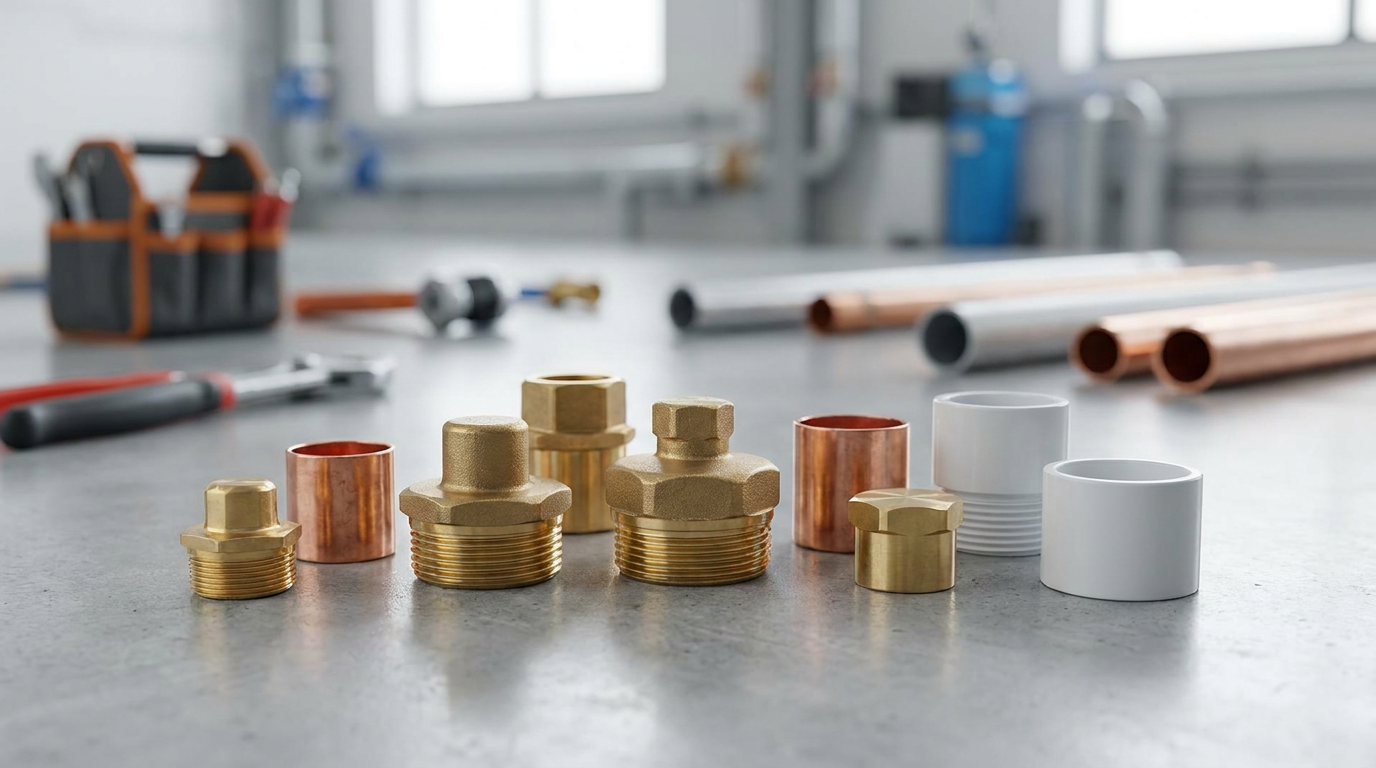
Caps for plumbing are small components with outsized impact in commercial water systems: they stop flow, protect pipework and simplify commissioning. This guide walks commercial contractors in Melbourne Northern Suburbs through material choices, sizing standards, installation methods and the cost drivers you must manage on projects.
Overview of Caps for Plumbing
Plumbing caps—also called caps for water pipes or pipe end caps—are fittings used to create a secure termination on a pipe run. In commercial plumbing contexts they perform several roles simultaneously: temporary commissioning seals during pressure testing, permanent terminations for branch lines, access points for future expansion, and protective closures to prevent ingress during construction.
Commercial pipework differs from residential systems in scale, duty cycles and regulatory oversight. Caps specified for commercial projects must meet higher pressure ratings, durability and material standards, and often require traceability and certification. The choice of cap affects system performance, maintenance intervals and lifecycle cost: a mismatch can cause leaks, premature corrosion or non-compliance with health and building codes.
Common functional categories of caps include: pressure-rated end caps, blind flanges (for large-diameter systems), threaded or welded closures for metal piping, and push-fit or solvent-weld caps for plastic systems used in non-critical applications. Specifying the right cap starts with understanding the pipe material, operating pressure, environmental exposure and regulatory requirements.
Real-world example: on a recent 12-storey commercial refurbishment in a Melbourne Northern Suburb office block, selecting 316 stainless steel caps for riser terminations prevented early galvanic corrosion that had previously affected buildings using galvanized closures; lifecycle modelling by the contractor showed a 40% reduction in replacement cost over 20 years (according to a 2024 project case study by the contractor).
Transition: With that functional context, next we compare the major cap types and where each is best applied on commercial projects.
Types of Caps for Plumbing and Their Applications
| Cap Type | Typical Materials | Commercial Applications | Installation Method | Pressure Suitability |
|---|---|---|---|---|
| Threaded caps | Brass, galvanised steel, stainless steel | Small-diameter service lines, temporary shut-offs, meter test points | Threaded (screwed) | Low–medium (varies by rating) |
| Welded caps (butt/weld) | Carbon steel, stainless steel, copper | Risers, high-pressure mains, fire systems | Welded | High (ASME/EN/AS standards) |
| Push-fit caps | PVC, CPVC, PEX (with seals) | Temporary closures, non-pressurised drains, service loops | Push-fit (mechanical) | Low |
| Solvent-weld caps | PVC, CPVC | Permanent terminations on plastic potable lines, drains | Solvent welding (chemical bond) | Low–moderate (per material spec) |
| Flanged blind caps / blind flanges | Carbon steel, stainless steel | Large-diameter mains, pump flanges, service ports | Bolted flange | High (to pipeline rating) |
| Compression caps | Brass, copper | Metering, service taps, copper pipe terminations | Mechanical compression | Low–medium |
Short descriptions and selection notes:
- Threaded pipe caps: Quick to install and remove; choose when access is required. Use when pipe threads match BSP/NPT and pressure ratings are acceptable.
- Welded caps: Provide the most robust, permanent seal for metal systems. Required on high-pressure, high-temperature or safety-critical mains; welding must follow certified procedures.
- Push-fit caps: Speed and tool-less installation are benefits for temporary works, but verify long-term suitability for potable or pressurised lines in commercial settings.
- Solvent weld caps: Offer leak-proof, permanent joints for PVC/CPVC systems. Ensure use of correct primer/solvent per manufacturer datasheet.
- Blind flanges: Standard approach for large-diameter pipelines and pump isolations — choose flange rating (PN/class) and bolt spec to match the mating flange.
- Compression caps: Often used for copper service terminations where welding is undesirable; check nut torque specs to avoid pipe deformation.
Material compatibility: threaded brass caps should not be used on stainless steel risers where dissimilar metal corrosion is possible; instead select a matching stainless closure or use dielectric isolation. For plastic-to-metal transitions, ensure sealing methods prevent stress concentrations and that the materials have compatible thermal expansion properties.
Transition: After choosing a cap type that fits the application, the next critical decision is material selection—each has trade-offs in cost, longevity and corrosion resistance.
Materials Used in Plumbing Caps: Pros and Cons
Material selection dictates lifespan, maintenance frequency and compliance avenues. Below are common materials used for caps in commercial plumbing, with succinct pros and cons to guide specification.
PVC caps
- Pros: Low cost, lightweight, easy solvent-weld installation, chemically resistant to many non-oxidising fluids, readily available in trade channels.
- Cons: Low temperature tolerance (softens above ~60°C), limited pressure rating for large diameters, not suitable for exposed outdoor UV unless protected, not appropriate for high-temperature hot water systems or fire mains.
Brass caps
- Pros: Good machinability, decent corrosion resistance in potable water, excellent for threaded applications, moderate cost compared with stainless.
- Cons: Susceptible to dezincification in aggressive waters unless specified as dezincification-resistant (DZR) brass, can be incompatible with stainless steel on long-term installations (galvanic issues).
Stainless steel caps (typically 304 or 316)
- Pros: Excellent corrosion resistance (316 preferred for chloride environments), high strength, longevity, suitable for hygienic/water applications and coastal installations, suitable for welding.
- Cons: Higher upfront cost, welding requires skilled trades and may need passivation; 304 is less resistant to chlorides than 316.
Galvanised steel caps
- Pros: Lower cost than stainless for steel systems, reasonable for non-potable or temporary works, robust for mechanical damage.
- Cons: Galvanised coating can fail in high-chloride or acidic environments, not recommended for potable water indefinitely; repairs to coating require proper surface prep.
Copper caps
- Pros: Good for domestic hot and cold copper systems, solders well, naturally antimicrobial in potable systems, compatible with copper pipework.
- Cons: Expensive compared with brass for similar fittings, can suffer pitting in certain waters, less suitable where mechanical abuse is expected.
Material selection tips for commercial projects
- Choose DZR brass or stainless steel for potable services in variable water chemistry. For chloride-laden or coastal environments, prefer 316 stainless.
- Match materials to reduce galvanic corrosion risk; where dissimilar metals are unavoidable, include dielectric isolation and specify sacrificial anodes if applicable.
- For fire systems and high-pressure mains, select welded carbon or stainless steel caps sized and rated to the system’s design pressure per project specifications and standards.
- Confirm manufacturer datasheets for pressure and temperature ratings; verify compliance with potable-water testing standards such as AS/NZS 4020 where required.
Transition: With material pros and cons clear, the next section explains how to determine the correct cap size, rating and compliance for water pipes on commercial jobs.
How to Select the Right Caps for Water Pipes
Selecting the correct cap combines accurate measurement, pressure and temperature rating checks, material compatibility and regulatory compliance. Below is a step-by-step professional walkthrough tailored for commercial projects.
- Identify pipe material and system function
Record pipe material (e.g., 316 stainless, carbon steel, PVC) and system type (potable, fire, chilled water, drainage). Material dictates compatible cap types and joining methods.
- Measure pipe sizing correctly
Measure both nominal pipe size (NPS/DN) and actual outside diameter (OD). For threaded caps ensure thread standard (BSP, NPT) and thread pitch. For welded or butt caps, measure OD and wall thickness to specify the correct dimension and machining allowance.
Professional tip: mark and measure at multiple points to account for ovality on older pipes; record both internal and external measurements if accessing both sides is possible.
- Check pressure and temperature ratings
Match cap rating to system design pressure (including test pressure). For fire mains and high-pressure risers choose caps rated to at least the system’s maximum working pressure and any hydrostatic test pressure. Confirm temperature operating range, especially for hot-water, steam or process lines.
- Confirm joining method
Decide between threaded, welded, solvent weld, push-fit or flanged terminations. For permanent high-pressure systems, welded or flanged closures are standard. For temporary commissioning or access, threaded or push-fit caps may be acceptable.
- Assess environmental exposure
Consider corrosion agents (chlorides, industrial chemicals), UV exposure, mechanical wear and climate. Specify stainless grades or protective coatings accordingly. For buried external caps, specify external protection and backfill considerations.
- Review compliance and certification
Verify caps meet relevant codes: potable-water caps may need AS/NZS 4020 testing; fire systems and pressurised mains require compliance with building code and relevant Australian Standards. For Melbourne projects, consult local authorities and documentation.
- Obtain manufacturer datasheets and certificates
Request product datasheets and test certificates for pressure rating, material grade (e.g., 316 S31603), and potable testing where applicable. Compare torque, gasket type and maintenance needs.
- Plan installation method and labour competency
Decide if welding, flanging or specialized solvents are required and ensure tradespeople are certified. For gas-related caps or systems with safety risks, use certified technicians (see training/ certification references below).
- Procurement and lead-time planning
Factor supplier lead times, custom machining, and surface treatments (passivation, galvanising). For projects in Melbourne Northern Suburbs, confirm local stock to avoid delays.
Professional measuring walkthrough (practical): place a steel tape across the pipe OD at three points 120° apart; average measurements if minor ovality exists. For threaded systems, identify thread class (e.g., BSP parallel or taper) and verify with a thread gauge before ordering caps.
Compliance note: always cross-check caps for potable water against AS/NZS 4020 and building authority requirements. For Victorian projects, consult the local regulator for any jurisdiction-specific documentation. For standard references, see the Victorian Building Authority and Standards Australia pages linked below.
Transition: Once the correct cap type and material are identified, the next major consideration is cost—both unit price and installed cost for commercial procurement.
Cost Factors Influencing Pricing of Plumbing Caps
Understanding cost drivers helps project managers balance upfront capital with life-cycle expenditure. Key cost factors include raw material prices, manufacturing processes, supplier markups, installation complexity and ordering volume.
Material costs: Stainless steel (especially 316) commands a premium over brass, and brass is costlier than PVC. As an example estimate (indicative only; market-dependent): small threaded PVC caps may retail for AUD 2–10, brass threaded caps AUD 10–40, stainless threaded or machined caps AUD 25–150, and custom welded stainless caps for large diameters can exceed AUD 500 each. These ranges reflect market variability and are affected by metal commodity pricing (According to a 2024 industry report on metal price trends).
Manufacturing and finishing: Machined, passivated and trace-numbered caps add to cost. Welding and subsequent NDT (non-destructive testing) will increase installed cost due to labour and inspection requirements. Custom flanges or blanking plates dimensioned to PN or class ratings require plate-cutting and machining costs.
Installation complexity and trade rates: Welded caps require certified welders and possibly hot-work permits, boosting installation labour by 30–60% versus a simple threaded installation. For gas or high-risk systems, specialist certification (and insurance) further increases costs; consider these when budgeting.
Supply chain and local availability: Local stock reduces lead times and often cost. For Melbourne Northern Suburbs projects, sourcing from nearby suppliers dramatically reduces freight and emergency call-out costs. When importing specialised parts, account for shipping, customs and minimum order quantities.
Bulk purchasing and economies of scale: Ordering caps in bulk for a program of works commands lower unit pricing. Typical discount bands: 5–15% for medium bulk and 15–30% for high-volume procurements, depending on supplier policy and lead times.
Examples/data blocks
- Example A — Small commercial office fitout: 20 brass threaded caps (15–25 mm) — material cost approx. AUD 250–600, installation ~AUD 400 labour; total ~AUD 650–1000 (According to contractor billing examples from a 2024 refurbishment project).
- Example B — Riser termination on a hospital refurbishment: 6 x welded 316 caps (50–150 mm) including NDT and passivation — unit cost AUD 300–900; installation and testing AUD 1,500–3,000; total project allocation ~AUD 4,500–9,000 (project procurement records, 2023 hospital works).
B P plumbing supplies product pricing
Other cost considerations
- Certification and traceability costs for materials used in potable or critical systems.
- Disposal and replacement costs if a cap is used temporarily during commissioning.
- Contingency for repair if unsuitable caps cause leaks or require rework (contractual allocations usually set 5–10% contingency).
Geographical pricing note: material and labour rates differ between Australian states. For a cross-reference on service cost structures, see comparisons at national service guides (see links to regional plumber services for context below).
Transition: With cost drivers understood, effective installation practices reduce risk and operating expense—next we cover best-practice installation and safety measures.
Installation Considerations and Best Practices
Proper installation ensures caps achieve their intended life and performance. This section lists tools, methods and a practical checklist for commercial installations, plus certification and safety pointers.
Tools and consumables
- Thread gauges and callipers for sizing
- Torque wrench for compression and threaded caps
- Welding equipment with qualified operators for welded caps
- Solvent-weld primers and cement for PVC/CPVC caps
- Flange bolting tools and calibrated torque sets
- Appropriate gaskets (material and rating match) and approved sealants
Installation methods by cap type
- Threaded caps: Clean threads; use approved PTFE or hemp where specified; torque to manufacturer spec; avoid over-tightening which can crack female fittings or damage seals.
- Welded caps: Preheat and procedure per welding spec; perform NDT as required (DT, UT or radiography); post-weld heat treatment and passivation for stainless when specified.
- Push-fit caps: Ensure pipe ends are deburred and clean; check seal seating depth and test at low pressure before commissioning.
- Solvent-weld caps: Apply primer and solvent cement per manufacturer’s dwell times; avoid disturbing joint until fully cured.
- Flanged blind caps: Use correct bolting sequence and torque; match PN/class and gasket to system pressure rating.
Best-practice checklist
- Verify cap material and matching part number against the job pack.
- Confirm cap rating >= system design pressure and test pressure.
- Ensure trades are certified: welders licensed, gas workers certified where relevant. professional plumber licensing and services
- Use manufacturer torque and installation instructions; keep datasheets on-site.
- Perform pressure tests after installation according to project testing regime; monitor for leaks and gauge stability.
- Record installation details: installer name, date, materials batch numbers for traceability.
Certification and training: welding and pressure-system work requires certified personnel. For gas or specialised systems, ensure installers meet the qualifications outlined in training guides. commercial gas plumber training and certification
Safety: follow hot-work permit procedures for welding, ensure confined-space protocols when working in pits or vertical shafts, and use correct PPE. For potable systems, prevent contamination during installation—cap immediate after cutting and purge before commissioning.
Transition: even with good installation, caps may require maintenance—next we address inspection intervals, common failure modes and replacement timing.
Maintenance, Troubleshooting and Replacement of Plumbing Caps
Regular inspection and an evidence-based replacement strategy prolong cap life and protect system integrity. Here are recommended inspection protocols and a troubleshooting guide for common failures.
Inspection schedule (commercial norms)
- Initial post-installation check within 24–72 hours after commissioning.
- Routine visual inspection every 3–6 months for visible systems in service.
- Annual detailed inspection for buried or concealed caps during scheduled maintenance windows.
- NDT or pressure testing after any suspect event (overpressure, impact, or corrosion detection).
Signs a cap needs attention
- Visible corrosion, pitting or coating delamination
- Weeping or dripping at joints or threaded connections
- Movement or looseness on threaded or bolted closures
- Evidence of thermal damage or softening on plastics
Troubleshooting guide
- Leak at threaded cap: verify torque, inspect thread damage, replace thread sealant and consider replacing with a new cap if thread integrity compromised.
- Leak at welded cap: isolate system, remove cap and inspect weld root; perform NDT; likely re-weld and apply post-weld treatment.
- Plastic cap deformation: check for exposure to temperatures above rated limits; replace with higher-temperature material (CPVC) or metal cap as needed.
- Corrosion under deposit: clean area, assess extent, replace cap with higher-grade material (e.g., 316 SS) and add protective measures.
Replacement cycles: no universal interval exists—replace based on inspection findings and manufacturer life expectancy. For example, brass caps in aggressive water may need replacement every 5–10 years, while 316 stainless caps can last 20+ years in non-abrasive environments (According to manufacturer life-cycle data and field maintenance records).
commercial plumbing maintenance guide
Documentation: maintain records of replacement dates, material batch numbers and inspection reports to satisfy compliance audits and warranty claims.
Transition: procurement and local market conditions influence how quickly you can replace or upgrade caps—next is a focused look at supplier options in the Melbourne Northern Suburb market.
Local Supplier and Market Overview for Melbourne Northern Suburb
The Melbourne Northern Suburb market provides a mix of national distributors, local wholesalers and specialist fabricators. For commercial projects, prioritise suppliers who can provide certification, traceable materials and emergency lead times.
Supplier types to consider
- National trade distributors with branch stock—fast supply of standard threaded and PVC caps.
- Local stainless fabricators—essential for custom welded caps, passivation and traceable material certificates.
- Specialist fire-protection suppliers—supply blind flanges and flange-rated caps with the necessary fire-system certifications.
Recommended supplier considerations (no hard selling):
- Stock depth and local branch availability to meet urgent site requirements.
- Ability to provide material test certificates (MTCs) and product datasheets immediately.
- Fabrication lead times and in-house NDT capability for welded closures.
- Warranty and returns policy for defective parts.
Local recommended suppliers (examples for project sourcing)
- Major trade distributors with Melbourne branches for standard parts.
- Stainless steel fabricators within the northern industrial precincts for bespoke caps and passivation services.
- Plumbing wholesalers that specialise in commercial and industrial fittings, providing in-branch technical advice and hold certified stock.
Contextual links for sourcing and market impact
biggest plumbing companies in Australia
industrial plumbing services and cost factors
industrial plumbing Melbourne contractors
Melbourne CBD plumber services and pricing
plumbing equipment buying guide
Regional comparison resources (for procurement planning)
- plumbing supplies Burleigh
- plumbing supplies Penrith NSW
- plumbing supplies Rockhampton
- plumbing supplies Shepparton
- plumbing supplies Wagga
- plumbing supplies Wangara pricing
- West Hobart plumbing services
Practical procurement tip: for Melbourne Northern Suburb sites, combine local branch pickup with a single fabrication partner for custom caps to cut inter-supplier handling and reduce lead times.
Transition: summarising the selection, installation and market advice helps embed the practical choices commercial teams should prioritise.
Summary and Key Takeaways for Commercial Plumbing Professionals
- Match cap type to application: welded or flanged closures for high-pressure/critical systems; threaded or push-fit caps for temporary works.
- Material matters: prefer 316 stainless in chloride-prone or coastal conditions; DZR brass for potable copper systems; avoid mismatched metals without dielectric isolation.
- Measure accurately: record both nominal and actual OD, confirm thread standard and wall thickness before ordering.
- Certify and document: request manufacturer datasheets, MTCs and evidence of compliance with AS/NZS standards where applicable.
- Budget realistically: include material, fabrication, NDT, labour, and contingency; expect higher costs for custom, welded or audited installations.
- Inspect routinely: scheduled visual checks, annual detailed inspections and immediate checks after pressure events mitigate failures and manage lifecycle cost.
- Local sourcing: use Melbourne Northern Suburb branches and fabricators to reduce lead times; verify supplier certification and stock availability.
- Use certified trades: welding, gas and pressure work require qualified personnel—document installer qualifications for compliance.
- Maintain records: batch numbers, installation dates and inspection logs are essential for warranty, compliance and asset management.
- Plan for replacement: use inspection data to predict replacement intervals and factor lifecycle costs into project budgets.
Final recap: selecting the right caps for plumbing on commercial projects is an engineering decision that saves time and money over the asset lifecycle—specify using accurate sizing, rated materials and certified installation, and buy from suppliers who provide traceable documentation.
Call to action: for project-specific guidance, consult manufacturer datasheets, engage a certified fitter and review local compliance on the Victorian Building Authority site before procurement.
External references:
- Victorian Building Authority — regulatory guidance and building practitioner info.
- Standards Australia — reference for AS/NZS standards including AS/NZS 4020.
- Manufacturer technical resources (example) — typical source for datasheets and installation guides.
Frequently Asked Questions
What are caps for plumbing and why are they used?
Plumbing caps are fittings that close pipe ends to prevent flow, protect interiors and allow testing or future extension. They are used for commissioning, permanent terminations, and temporary closures in commercial systems where sealing integrity and material compatibility are required.
How do threaded caps compare to welded caps in plumbing applications?
Threaded caps offer quick install/removal and are suitable for low–medium pressure and access points; welded caps provide permanent, high-integrity seals for high-pressure or safety-critical systems but require certified welding and inspection.
What materials are best for caps on water pipes in commercial buildings?
For commercial potable and corrosive environments, 316 stainless steel is preferred; DZR brass is common for copper systems; PVC/CPVC suits low-temperature, non-pressurised or non-critical applications—choose per exposure and pressure requirements.
How do I measure the correct size for plumbing caps?
Measure the pipe’s nominal size and actual outside diameter (OD), check wall thickness, and identify thread standard (BSP/NPT) if relevant. Take multiple OD readings to account for ovality and verify against manufacturer sizing tables.
What factors influence the cost of plumbing caps for commercial projects?
Costs depend on material (stainless, brass, PVC), manufacturing (machining, welding, passivation), installation complexity (welding, NDT), supplier markups, lead times and order volume; custom or certified caps cost significantly more.
How should plumbing caps be installed to ensure a secure seal?
Follow manufacturer installation instructions: torque threaded caps correctly, use solvent welding for PVC, perform certified welding and NDT for metal caps, use correct gaskets for flanged caps, and document installer credentials and batch numbers.
What common issues cause plumbing caps to fail or leak?
Failure causes include incorrect material selection (corrosion), improper installation (under/over-torque, poor weld), thermal degradation of plastics, gasket failure, and mechanical damage; routine inspection identifies early signs.
How can I verify the quality and compliance of plumbing caps before purchase?
Request manufacturer datasheets, material test certificates (MTCs), AS/NZS compliance evidence (e.g., AS/NZS 4020 where relevant) and ensure supplier traceability; verify installer certifications and confirm testing procedures for the system.