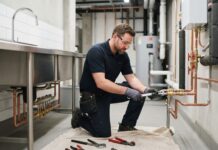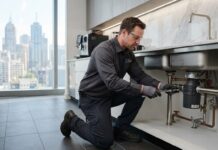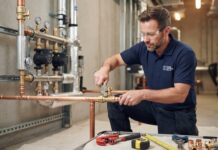
Commercial gas plumber — if you want to install, service and certify gas systems in Melbourne’s northern suburbs, this guide gives the full step-by-step pathway from apprenticeship to licensed commercial gas fitter. Read on for the local compliance checkpoints, training timeline, on-site mentoring tips and career-advancement routes specific to Melbourne.
Introduction to Commercial Gas Plumbing as a Career
Commercial gas plumbing focuses on larger-scale gas systems used in restaurants, factories, apartment complexes and institutional buildings, rather than single-family homes. A commercial gas plumber in Melbourne installs, tests and maintains high-capacity gas infrastructure (meters, gas mains, industrial burners, commercial boilers and LPG systems) and must meet strict safety and regulatory standards.
The job outlook for gas plumbing in Melbourne’s northern suburbs is shaped by ongoing commercial development, stricter energy efficiency rules and retrofit work on older stations and kitchens. According to a 2024 industry report, demand for qualified gas tradespeople grew in metropolitan regions as commercial fit-outs and hospitality refurbishments increased. This guide explains what employers expect and how to prepare.
Transition: Next we’ll unpack the day-to-day responsibilities and compliance obligations you’ll shoulder as a commercial gas plumber in Melbourne.
Understanding the Role and Responsibilities of a Commercial Gas Plumber
A commercial gas plumber is accountable for planning, installing, testing and certifying gas systems to meet Australian standards and Victorian regulations. Work is often performed on multi-appliance systems, high-pressure supplies and integrated building services. The role requires technical precision and a thorough understanding of gas safety compliance.
- Design and installation — interpret plans, size pipes and select appropriate materials for commercial gas systems.
- Commissioning and testing — pressure testing, leak detection, combustion analysis and certification of installations.
- Maintenance and servicing — scheduled servicing of boilers, commercial ovens, gas heaters and meter replacements.
- Emergency response — isolate supplies, diagnose leaks, and coordinate with utility providers and building managers.
- Compliance and documentation — prepare compliance paperwork, gas certificates, and liaise with certifying authorities for audits.
- Project coordination — work with HVAC, electrical and building contractors on integrated commercial projects.
- Client communication — explain safety risks and remediation steps to facilities managers and owners.
Key duties often differ from residential plumbing due to scale and regulatory oversight. Commercial projects require more formal planning, permit coordination and rigorous testing protocols. For example, installations feeding multiple appliances or involving higher pressures require specialised certification and may need coordination with the gas distributor.
Safety and compliance form a significant portion of daily responsibilities. You’ll regularly reference Australian standards (AS/NZS 5601.1 for gas installations) and meet Victorian Building Authority reporting requirements. According to the Victorian regulator’s guidance, certifying gas work on commercial premises may involve additional inspections and record-keeping compared with residential jobs.
Transition: After understanding the responsibilities, let’s examine the prerequisites and skills you need before and during training.
Prerequisites and Skills Needed to Become a Commercial Gas Plumber
- Basic trade readiness and physical fitness
- Mathematical and blueprint-reading ability
- Mechanical aptitude and sensor/diagnostic skills
- Formal qualifications: Certificate III in Plumbing (with gas units)
- Driver’s licence and ability to travel across Melbourne Northern Suburbs
- Strong communication and teamwork skills
1. Physical and practical skills: Commercial gas fitting often involves lifting, working in confined spaces and climbing. Employers typically expect endurance and safe manual-handling capability. Practical dexterity for brazing, flaring and mechanical jointing is essential.
2. Technical knowledge: You need to understand gas properties, pressure relationships and combustion principles. Familiarity with reading plans, interpreting schematic diagrams and using combustion analysis tools is critical.
3. Problem-solving and diagnostic skills: Commercial systems present complex fault-finding tasks — intermittent leaks, appliance commissioning, or pressure-drop issues across multi-level buildings. Strong troubleshooting speeds up service calls and reduces safety risk.
4. Communication and compliance literacy: You must document compliance, prepare gas certificates, and communicate risks to clients and authorities. Working in commercial settings requires coordination with building managers, certifiers and other trades.
5. Attitude and work readiness: Reliability, attention to detail and commitment to safety culture are non-negotiable. Employers in Melbourne value trainees who proactively log hours, seek mentoring and complete CPD requirements.
Transition: With core skills established, the next section gives a detailed training pathway—from apprenticeship through Certificate III in Plumbing—with a timeline table to plan your route in Melbourne.
Training Pathways for Commercial Gas Plumbers in Melbourne
To become a qualified commercial gas plumber in Victoria you’ll typically follow an apprenticeship-based pathway anchored by the Certificate III in Plumbing. Training blends classroom learning with on-the-job competency. Below is a step-by-step pathway and a practical timeline for achieving qualifications and gas-specific endorsements.
- Complete Year 10–12 or equivalent foundation (recommended) — literacy, numeracy and basic trade subjects.
- Secure an apprenticeship (4 years typical) with an employer registered to take on apprentices.
- Enroll with an RTO for Certificate III in Plumbing (includes core plumbing and gas-fitting units).
- Complete mandated on-the-job hours and logbook tasks for domestic and commercial competency.
- Complete gas-specific units (gas appliance installation, testing, LPG systems) and workplace assessments.
- After qualification, apply for gas fitting accreditation and any Victorian trade endorsements required by VBA for commercial gas work.
- Gain additional experience on commercial jobs, obtain mentoring and collect evidence for licensing and endorsement applications.
Where to train: A number of Registered Training Organisations (RTOs) in Victoria deliver the Certificate III in Plumbing with gas-fitting competency units. Many apprentices split weekly between TAFE/RTO classes and on-site placement. According to the Australian Government’s apprenticeship framework (2024), typical plumbing apprenticeships combine structured training with >4,000 on-the-job hours across four years.
plumber Melbourne CBD service guide
Course content highlights (gas units commonly included):
- Installation and removal of gas appliances
- Gas system pressure testing and leak detection
- Combustion analysis and flue system checks
- LPG handling and cylinder exchange procedures
- Compliance paperwork and gas certification procedures
Typical timeline table (example progression):
| Stage | Duration | Milestones |
|---|---|---|
| Pre-apprenticeship | 3–6 months | Basic trade skills, safety courses, resume & employer outreach |
| Early apprenticeship | 0–18 months | Core plumbing skills, workplace familiarisation, initial gas units |
| Mid apprenticeship | 18–36 months | Advanced gas fitting units, supervised commercial placements |
| Late apprenticeship | 36–48 months | Competency sign-off, assessment, Certificate III awarded |
| Post-certification | 6–24 months | Commercial experience, endorsements and licensing application |
Tips for Melbourne Northern Suburbs apprentices:
- Target employers with commercial portfolios (hospitality, apartment building projects) to gain relevant exposure.
- Document every commercial job with photos and supervisor sign-off to support later certification applications.
- Use local RTO networks and industry nights to meet potential mentors and employers.
Transition: After finishing your training and Certificate III units, you’ll need to navigate certification and licensing — the next section lays out the exact steps and compliance checklist for Victoria.
Certification and Licensing Process for Commercial Gas Plumbers
Obtaining formal certification and a licence to perform commercial gas work in Victoria involves verifying qualifications, securing endorsements, and meeting Victorian Building Authority (VBA) rules. This section provides a how-to sequence and a practical compliance checklist for Melbourne practitioners.
- Verify your qualification: Provide your Certificate III in Plumbing (including gas units) from an accredited RTO.
- Obtain a gas fitting certificate or endorsement where required: applications differ for natural gas and LPG and for commercial-level pressures/fixtures.
- Apply to the VBA or hold an authorised signatory if required for specific commercial certifications (refer to VBA guidance).
- Provide evidence of on-the-job experience and competency — employer references, logbook entries and workplace assessments.
- Meet insurance and business registration requirements (public liability, professional indemnity where applicable).
- Comply with any gas distributor notifications or permits for high-capacity commercial connections.
- Prepare for compliance audits and maintain records as required by Victorian regulations.
Practical steps to apply in Victoria:
1) Gather documents: certified copy of Certificate III, RTO statement of attainment for gas units, apprenticeship completion letter, logbook and employer references.
2) Contact VBA for the current licensing pathway applicable to commercial gas work — Victorian Building Authority is the primary regulator for plumbing licences. According to 2026 VBA guidance, commercial gas fitting requires evidence of gas-specific competencies and may require additional endorsements for complex systems.
3) Submit licence/endorsement application and pay fees. Expect assessments or additional checks related to compliance history.
commercial plumbing guide to services and compliance requirements
Compliance checklist for commercial gas plumbers (Victoria):
- Certified Certificate III in Plumbing with gas-fitting units
- Workplace evidence: completed on-the-job hours and commercial project sign-offs
- Current public liability insurance (recommended amounts vary with project size)
- Gas appliance compliance paperwork and test certificates retained for audits
- Notifications to gas distributors for metering or service changes
- Participation in CPD where mandated by employer or industry body
External resources and authority references:
- Victorian Building Authority — licensing and certification standards.
- Australian Government Department of Industry, Science and Resources — apprenticeship and trade training frameworks and statistics.
- Safe Work Australia — gas safety regulations and compliance guidelines.
professional plumber guide to services, licensing and costs
Disclaimer: Regulations and application procedures change. Consult the VBA and your RTO for the most current steps and document lists.
Transition: Certification is only part of the learning curve — practical on-the-job training and mentorship accelerate competence in commercial environments. The next section outlines mentorship strategies and real-world examples.
Practical On-the-Job Training and Mentorship
Hands-on experience in commercial projects is the most valuable training. Apprentices should seek placements where they can work on restaurant fit-outs, multi-apartment gas reticulations or industrial boiler installations. Practical competence builds with exposure to diverse appliances and system pressures.
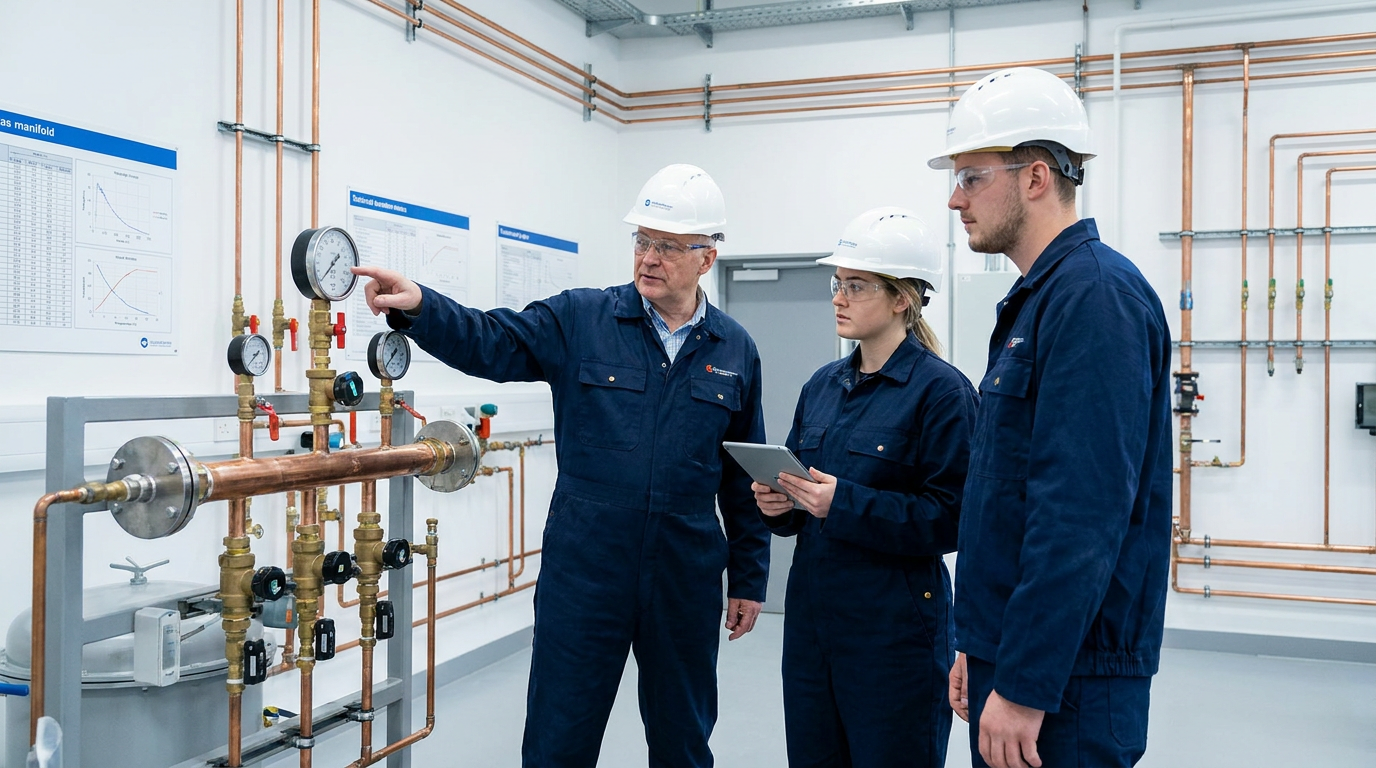
Example apprenticeship case study (Melbourne Northern Suburbs): Tom, a second-year apprentice, was placed on a café fit-out project where he shadowed a senior gas fitter. He logged pressure-testing tasks, participated in combustion checks and completed supervised appliance commissioning. According to his RTO supervisor’s records (2024), on-site mentorship reduced remedial call-backs by 30% compared to unsupervised trainees.
Curated tips for mentors and apprentices:
- Structured learning: Break commercial competencies into modules — piping, metering, appliance commissioning, LPG handling — and rotate apprentices through each.
- Shadowing and graduated responsibility: Start with observation, progress to supervised tasks and then independent sign-offs under mentor review.
- Document learning: Keep photographic records, test certificates and supervisor notes to support later licensing applications.
- Safety-first culture: Mentors should demonstrate and enforce hot-work permits, confined-space entry procedures and gas isolation protocols.
commercial plumbing maintenance guide
Common challenges and how to overcome them:
- Limited commercial exposure: Rotate through subcontractors and seek short-term placements on commercial projects to build breadth.
- Complex documentation: Mentors should coach apprentices in certificate completion and record-keeping to avoid compliance gaps.
- High-pressure environments: Train apprentices on time management and quality checks to reduce mistakes under commercial deadlines.
Important: During on-site training you must follow workplace safety systems and ensure any gas work you perform is supervised until authorised by a licensed fitter. For maintenance-focused learning, reference the commercial plumber service guide for maintenance and costs to understand the typical service scopes apprentices will encounter.
Transition: Effective commercial gas fitting also depends on the right tools, equipment and strict safety processes — covered next.
Tools, Equipment, and Safety Requirements for Commercial Gas Plumbers
Commercial gas plumbers use both standard plumbing tools and specialised gas-diagnostic equipment. Investing in quality tools increases reliability on complex commercial jobs and reduces rework.
- Essential hand tools: pipe wrenches, spanners, tubing cutters, flaring tools and adjustable wrenches.
- Specialised tools: pressure test gauges, manometers, combustion analyzers, flue gas analyzers and gas leak detectors.
- Power tools: portable band saws, grinders, cordless impact drivers and pumps for pressure testing.
- Gas-specific equipment: LPG regulators, metering adaptors, isolation valves and approved flexible connectors.
- PPE: flame-resistant clothing, safety glasses, gloves suitable for welding/brazing, respiratory protection where required and hearing protection.
Safety protocols (commercial focus):
- Permit-to-work and hot-work permits for brazing or welding.
- Gas isolation procedures and communication with the gas distributor for major shut-downs.
- Leak detection checks before commissioning; re-check after 24–48 hours for high-risk installs.
- Confined space entry plans for meter rooms and basements.
- Use of calibrated combustion analyzers to verify safe appliance operation.
caps for plumbing guide to selection and cost factors
B P plumbing supplies guide to products and pricing
plumbing equipment buying guide and online supplier options
plumbing sale guide to sourcing discounted equipment and parts
plumbing supplies Burleigh buying guide
Where to source tools and parts: use specialist suppliers and consider bulk-purchasing consumables for project continuity. For pricing and supplier options, see the B P plumbing supplies guide to products and pricing and the plumbing equipment buying guide and online supplier options.
Transition: Maintaining competence requires continuous learning — the next section outlines CPD, compliance updates and career advancement strategies.
Continuing Education, Compliance Updates, and Career Advancement
Continuing professional development (CPD) keeps commercial gas plumbers current with new standards, technologies and safety processes. Many employers and certifying bodies expect ongoing engagement in training to maintain endorsements and reduce liability.
CPD and compliance activities:
- Attend VBA- or industry-recognised CPD workshops on gas safety and new standards.
- Complete refresher courses on AS/NZS 5601.1 updates and combustion technology changes.
- Participate in manufacturer training for specific commercial appliances (boilers, burners, refrigeration).
- Regularly calibrate diagnostic tools and document calibration certificates.
- Stay informed on local council plumbing regulations in Melbourne Northern Suburbs and any changes to gas distribution rules.
Numbered recommendations to advance your career:
- Specialise: pursue endorsements in commercial boilers, high-pressure systems or LPG bulk installations.
- Gain supervisory qualifications: workplace assessor or trainer credentials to move into mentorship roles.
- Obtain business skills: take short courses in estimating, project management and OH&S for contractor readiness.
- Pursue additional licences: consider plumbing contractor or permit-holder credentials to lead commercial projects.
- Network: join industry associations and attend trade shows to keep sight of employer demand and new tech.
According to a 2024 industry skills report, tradespeople who complete targeted CPD and manufacturer training increase billable rates and reduce warranty call-backs by measurable margins. Keep records of CPD and training to support licence renewals and tender applications.
Transition: Now that you’re equipped with CPD directions, let’s look at career prospects and expected salaries for commercial gas plumbers working in Melbourne.
Career Prospects and Salary Expectations for Commercial Gas Plumbers in Melbourne
Stat block
- Average pay range (Melbourne, 2025–26): $65,000–$110,000 AUD annually for qualified commercial gas plumbers, depending on experience and whether employed or contracting — according to a 2025 industry salary survey.
- Apprentice wages: scaled over apprenticeship years; typically 40–60% of qualified rates in early years (2024 apprenticeship wage tables).
- Contractor rates: day rates or hourly rates higher than employed plumbers but require business costs coverage (insurance, tools, vehicle).
Prospects: Commercial projects, maintenance contracts and industrial commissions in Melbourne Northern Suburbs drive steady demand, especially in hospitality, healthcare and multi-residential sectors. Skilled commercial gas plumbers can progress from onsite roles to project supervision, estimations or start their own contracting business.
biggest plumbing companies in Australia
industrial plumbing contractors guide
industrial plumbing Melbourne services and contractor guide
commercial plumber Perth services guide
plumbing business guide to startup requirements and costs
Contractor vs employee: Employees get stable pay and fewer administrative burdens; contractors earn higher gross rates but must cover overheads and secure work. Many qualified commercial gas plumbers combine employed work with subcontracting on weekends to build client lists before launching their own business. For those considering business ownership, review the plumbing business guide to startup requirements and costs.
Transition: Below are final takeaways and a call to action to start your path toward becoming a licensed commercial gas plumber in Melbourne’s northern suburbs.
Conclusion
This guide has mapped the training and certification journey for a commercial gas plumber in Melbourne: from building the right skills and completing a Certificate III in Plumbing, to apprenticeship strategies, licensing with the VBA and ongoing CPD. Focus on structured on-the-job training, documented competencies and compliance with Victorian gas safety rules to progress reliably.
Next steps: Contact a local RTO to discuss Certificate III enrolment, approach commercial employers in the northern suburbs for apprenticeship placements, and consult the Victorian Building Authority and Safe Work Australia pages for current licensing and safety requirements. Ready to start? Begin your apprenticeship search today and build the documented experience required for commercial gas fitting endorsement.
Frequently Asked Questions
What does a commercial gas plumber do differently from a residential plumber?
A commercial gas plumber works on larger-capacity systems—commercial boilers, LPG bulk systems, multi-appliance reticulation—requiring stricter testing, documentation and coordination with building services and gas distributors. Commercial work demands higher-level compliance, pressure testing regimes and often separate endorsements compared with residential plumbing.
How long does it take to become a certified commercial gas plumber in Melbourne?
Becoming certified typically takes about four years via an apprenticeship that includes completion of Certificate III in Plumbing and gas-fit units, plus additional time for commercial experience and endorsements needed for complex systems, according to Australian apprenticeship frameworks (2024).
What training courses are required to become a commercial gas plumber?
You must complete a Certificate III in Plumbing with gas-fitting competency units from an accredited RTO, combined with an apprenticeship’s on-the-job hours. Additional manufacturer or specialised courses (boilers, LPG systems) strengthen commercial endorsements.
How do I apply for a commercial gas plumber license in Victoria?
Gather your Certificate III, RTO statements for gas units, apprenticeship completion evidence and employer references, then submit an application to the Victorian Building Authority. Follow VBA guidance for endorsements and provide required insurance and documentation.
What is the average salary for a commercial gas plumber in Melbourne?
Qualified commercial gas plumbers in Melbourne typically earn between $65,000 and $110,000 AUD annually (2025 industry salary survey), varying by experience, employer, and whether you operate as a contractor or employee.
What tools are essential for a commercial gas plumber on site?
Essential tools include pressure gauges, manometers, combustion analyzers, gas leak detectors, tubing cutters, brazing equipment and PPE (flame-resistant clothing, respirators). Quality diagnostics and calibrated analyzers are critical on commercial jobs.
How often do commercial gas plumbers need to renew their certification or license?
Licence renewal cycles vary; check the Victorian Building Authority for current renewal periods and CPD requirements. Maintain CPD records, updated tool calibration certificates and compliance paperwork to support renewals and audits.
What are the main safety risks for commercial gas plumbers and how are they managed?
Main risks include gas leaks, combustion hazards, confined-space entry and hot-work incidents. Manage risks with gas isolation procedures, leak detection, hot-work permits, confined-space plans and use of calibrated combustion analyzers and PPE per Safe Work Australia guidance.