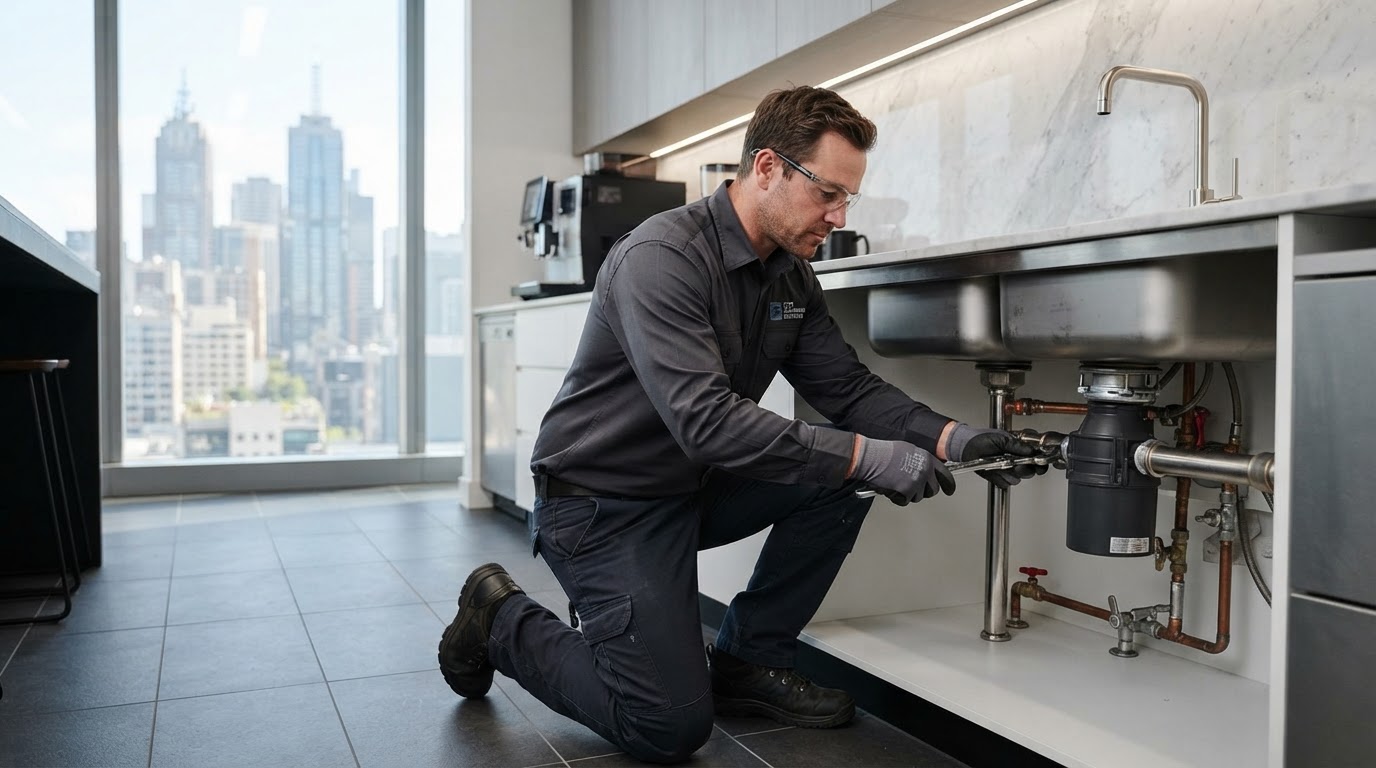
plumber melbourne cbd — Businesses in Melbourne CBD need commercial-grade plumbing that balances fast response, compliance and transparent pricing. This guide explains service types, pricing structures and how to choose the right licensed team so your business can make a confident hire.
Overview of Plumber Services in Melbourne CBD for Businesses
Melbourne CBD businesses rely on specialised commercial plumbing to minimise downtime, meet building regulations and manage water usage. Commercial plumbers in Melbourne city typically offer a mix of reactive, preventative and project-based services tailored to offices, retail, hospitality and mixed-use buildings.
Core service categories you’ll commonly see in the CBD:
- Emergency response — after-hours repairs to stop leaks, clear major blockages and restore essential systems.
- Planned maintenance — scheduled inspections, drain cleaning and water efficiency checks to prevent business disruption.
- Repairs and upgrades — pipe repair, backflow prevention, fixture replacement and hot water system servicing for commercial fixtures.
- Project and fit-out work — tenant fit-outs, relocation of services, and coordination with builders and certifiers on multi-storey premises.
- Compliance and certification — documentation, testing and certificates required by local councils and the Victorian Building Authority (VBA).
- Specialist services — grease trap servicing for restaurants, hydraulic assessments for large plumbing networks, and pressure boosting systems for high-rise buildings.
Licensed plumbers Melbourne city work across these categories with trade-specific tools, insurance and business-grade guarantees. Businesses value contractors who combine quick turnaround with consistent record-keeping, digital reporting and verified compliance outcomes.
Transition: Now that you have a snapshot of what commercial plumbers do in Melbourne CBD, let’s break down the specific service types you’re most likely to need.
Types of Commercial Plumbing Services Available in Melbourne CBD
-
Emergency Plumbing and After-Hours Response
Emergency plumbing covers burst pipes, major leaks, sewer overflows and urgent blockages that threaten business operations. Commercial teams offer 24/7 call-out services and prioritise containment (shutting off water, temporary repairs) before scheduling permanent fixes. Typical scenario: a burst service pipe on a ground-floor retail tenancy that requires immediate isolation and temporary reinstatement to keep adjacent stores open.
-
Drainage Clearing and Sewer Remediation
Drain clearing for commercial properties often involves high-pressure jetting, CCTV drain inspections and root removal. For CBD businesses, access complications (basements, shared drains) and compliance with trade waste regulations make professional drainage work essential. Example: weekly grease-trap cleaning and quarterly CCTV inspections for a busy CBD café to avoid council fines.
For heavier systems readers may refer to industrial plumbing Melbourne services and contractor guide for scope and contractor selection.
-
Pipe Repair, Relining and Replacement
Commercial pipe repair options include traditional excavation, pipe relining (trenchless rehabilitation), and full replacement for older materials. Relining is often used in CBD settings to avoid pavement or tenancy disruption. Contractors will assess access, the material of existing pipes (copper, PVC, cast iron) and propose the least disruptive solution.
For cases involving heavy-duty assets consider the industrial plumbing contractors guide to services and costs.
-
Water Leak Detection and Metering
Commercial-grade leak detection uses acoustic equipment, thermal imaging and sub-meter checks to locate hidden leaks without unnecessary demolition. Metering and sub-meter installations help businesses allocate water costs across tenancies and comply with efficiency reporting.
-
Hot Water Systems — Commercial and High-Capacity Solutions
Services include installation and maintenance of continuous-flow gas units, electric storage systems, and centralized plant-room systems for hotels and larger office buildings. Technicians size systems to peak demand and consider redundancy to avoid service interruptions during peak trading hours.
-
Backflow Prevention and Test & Tag Certification
Backflow devices protect potable water from contamination and require regular testing by licensed testers. In the CBD, shared services and complex riser systems increase the number of critical backflow points per building.
-
Grease Trap Servicing and Trade Waste Management
Restaurants and commercial kitchens require scheduled grease-trap pumping, line cleaning and trade waste permits. Compliance with trade waste rules prevents costly fines and odour-related business interruptions.
-
Preventative Maintenance Plans and Condition Reporting
Commercial maintenance plans are tailored to business risk profiles: monthly checks for food service tenancies, quarterly inspections for office fit-outs and annual riser checks for multi-storey properties. Digital condition reports, photographic records and service histories help with compliance and insurance claims.
See the commercial plumbing maintenance guide to repair and costs for budgeting and scheduling templates.
-
Fit-Outs, Tenant Works and Coordination with Builders
Tenant fit-outs include new fixture installations, repositioning of services and coordination with builders and certifiers. CBD fit-outs must often comply with heritage overlays, strata rules or building-owner specifications addressing service access and hours of work.
For businesses assessing larger contractors, consult the biggest plumbing companies in Australia guide and overview.
-
Pressure Boosting and Pump Systems
High-rise and older CBD buildings may need booster sets, variable speed drives and storage tanks to meet pressure and hot water needs. Maintenance of pumps, pressure sensors and control systems is critical to avoid tenant complaints and service shortfalls.
-
Water Efficiency Upgrades and Sustainability Retrofits
Commercial plumbers advise on low-flow fixtures, automated flush controls, rainwater harvesting and greywater reuse where permitted. Upgrades are often part of sustainability certification efforts (Green Star or NABERS) and can reduce operating costs long-term.
For regulatory details see our industrial plumbing contractors guide to services and costs for intersections with compliance and sustainability (note: the pillar covers more technical compliance).
Transition: With a clear picture of available services, the next section explains how those services are priced in Melbourne CBD and what drives cost variability.
Factors Influencing Plumbing Service Pricing in Melbourne CBD
Pricing for commercial plumbing in Melbourne CBD depends on multiple components: call-out fees, hourly labour, parts and materials, specialist equipment (e.g., CCTV, jetting trucks), emergency surcharges and permit or certification costs. Below we break down each component and provide typical ranges to help businesses budget effectively.
Terminology (brief definitions):
- Call-out fee — a fixed charge to attend site before work begins (covers travel and initial assessment).
- Hourly rate — labour charge per plumber per hour, variable by level of licencing and urgency.
- Emergency surcharge — premium applied to after-hours or urgent response jobs.
- Parts and labour — combined cost of materials plus the time to install or repair.
| Pricing Component | Typical Range (Melbourne CBD) | Notes |
|---|---|---|
| Call-out fee (business hours) | $120–$220 | Includes initial diagnosis; may be waived if work proceeds. |
| Hourly labour (licensed tradesperson) | $95–$180 per hour | Senior technicians and specialist certifications sit at the top end. |
| After-hours / emergency surcharge | +25% to +100% | Higher on public holidays and late-night call-outs. |
| Small parts & consumables | $20–$250 | Fixtures, seals, small pipe sections; GST usually applies. |
| Major components (e.g., commercial mixer, booster pump) | $800–$15,000+ | Wide variance by capacity and brand. |
| Specialist equipment hire (CCTV, jetter) | $200–$700 per day | Often included for complex drain work or charged separately. |
| Permit/certification fees | $0–$1,200+ | Depends on council requirements and testing costs. |
Comparison: Melbourne vs other cities — businesses often ask how Melbourne pricing stacks up. For comparative perspectives see the commercial plumber Perth services guide and cost overview to examine regional labour and equipment cost differences.
Key pricing drivers explained:
- Access and location — CBD high-rise access constraints, loading dock requirements and security clearances add time and cost.
- Risk and insurance — work in public spaces or shared services increases insurance and OH&S controls, often passed to the client.
- Specialist skill sets — commercial backflow testers, gas-licensed plumbers and hydraulic designers bill at higher hourly rates.
- Materials selection — brass, copper and stainless fittings cost more than standard PVC; selection affects longevity and compliance.
- After-hours urgency — emergency response attracts surcharges; planned out-of-hours work is often cheaper if scheduled in advance.
Example cost scenarios (real-world style):
-
Small office leak — Call-out ($150) + 1.5 hours labour ($225) + parts ($40) = ~$415 (business hours). If after-hours, add 50% emergency surcharge = ~$622.50.
-
Café grease-trap blockage — Call-out ($180) + CCTV & jetting ($450) + 2 hours labour ($360) = ~$990; ongoing grease-trap servicing packages reduce per-visit cost.
-
Riser pipe relining (mid-rise commercial) — Site assessment ($500) + relining per metre ($300–$700/m depending on pipe size and access) + permit/testing = $10,000–$35,000 depending on length and complexity.
Cost control levers businesses can use:
- Schedule non-urgent works during business hours and in block bookings to reduce mobilisations.
- Use fixed-price quotes for defined scopes to limit scope creep.
- Procure parts through supplier relationships or consider supplier rebate options; see the B P plumbing supplies detailed guide to products and pricing for procurement context.
- Consider maintenance plans to detect faults early and avoid high emergency premiums.
For procurement tactics and discount sourcing refer to the plumbing sale guide to sourcing discounted equipment and parts and the caps for plumbing guide to selection and cost factors overview for material selection impact.
Transition: With pricing components explained, the next section helps you choose the right plumber in Melbourne CBD for your business needs.
How to Choose the Best Plumber in Melbourne CBD for Your Business
Choosing a commercial plumber involves more than comparing hourly rates. Prioritise licencing, verified experience in CBD environments, response times, guarantees and clear documentation practices. Below are step-by-step selection criteria and practical tips.
-
Check Licensing and Accreditation
Verify a plumber’s licence and endorsements for commercial work and gas fitting where required. Ask for their registration number and confirm via relevant authorities. Also check memberships in industry bodies such as the Master Plumbers Association Australia for added assurance.
External verification resources: Victorian Building Authority and Master Plumbers Association Australia provide licensing information and industry standards.
For gas-specific skills, review the commercial gas plumber training and certification guide.
-
Evaluate Commercial Experience and References
Request case studies or references for past CBD projects that match your building type (restaurants, offices, retail). Ask about access negotiation with building managers, after-hours work records and outcomes for similar scopes.
For businesses weighing large contractors, see the biggest plumbing companies in Australia guide and overview.
-
Request Detailed, Written Quotes
Obtain itemised quotes that separate call-out fees, labour hours, parts, equipment hire and permit costs. A good quote will define exclusions, payment terms, warranty periods and estimated turnaround times.
For maintenance-specific contracting depth, consult the commercial plumber service guide for maintenance and costs.
-
Assess Response and Turnaround Capabilities
Ask for guaranteed response windows (e.g., 2-hour emergency response, 24-hour non-urgent). Confirm after-hours escalation paths and whether the contractor keeps spare parts for common fixtures to speed repairs.
-
Confirm Insurance, Safety and Compliance Practices
Verify public liability and professional indemnity insurance limits, ask for evidence of safety training and site-specific safety plans. For compliance-heavy works, ensure the plumber will provide certificates of compliance and test results.
Large organisations may require higher insurance limits; reference the biggest plumbing companies in Australia guide and overview for how larger contractors structure risk management.
-
Look for Guarantees, Warranties and Aftercare
Prefer contractors offering written warranties on parts and labour with defined rectification processes. A clear warranty reduces the risk of recurring failure and clarifies the contractor’s commitment to quality.
-
Evaluate Communication and Documentation
Contractors that provide digital reports, photos and compliance paperwork on completion are easier to manage. Make sure your chosen plumber uses clear invoicing and delivers certificates needed for council or insurance records.
-
Compare Value, Not Just Price
Cheaper hourly rates can mask higher travel times, poor parts quality or lack of compliance documentation. Weight quotes by total lifecycle cost: workmanship quality, warranty terms and record-keeping matter in commercial settings.
-
Negotiate Terms for Ongoing Work
For regular servicing, negotiate fixed pricing or retainer arrangements to stabilise costs and give priority scheduling. Confirm contract exit terms and SLA details for emergency response.
See the commercial plumbing maintenance guide to repair and costs for sample service-level agreements and budgeting templates.
-
Consider Specialist Certification and Subcontracting
For multi-discipline works (gas, hydraulic design, backflow testing), ensure the lead contractor can coordinate certified subcontractors and provide consolidated documentation.
For gas qualifications see the commercial gas plumber training and certification guide.
Transition: After shortlisting contractors, you’ll need to understand the local compliance landscape for Melbourne CBD commercial plumbing.
Understanding Plumbing Compliance and Regulations Specific to Melbourne CBD Businesses
Commercial plumbing in Melbourne CBD must meet local building codes, water efficiency standards and health regulations. Contractors must issue certificates and compliance documentation for completed works. Below are practical compliance considerations and official resource references for business owners managing plumbing work.
Key regulatory resources:
- Victorian Building Authority (VBA) — licencing, compliance frameworks and registration checks.
- Australian Building Codes Board (ABCB) — national plumbing code cross-references and technical standards.
- Master Plumbers Association Australia — industry guidance and best-practice resources.
Practical compliance checklist for Melbourne CBD businesses:
- Confirm licensed plumber registration and required endorsements for gas or backflow work.
- Obtain and retain Certificates of Compliance for plumbing and drainage works.
- Ensure backflow devices are tested and documented at required intervals and records are available for council inspections.
- For food premises, verify trade waste approvals and grease-trap servicing records to meet council health requirements.
- Check water efficiency standards and NABERS/Green Star implications for major upgrades.
- For tenant fit-outs, confirm building owner and strata approvals, and provide method statements for disruptive works in shared spaces.
How compliance is managed practically on CBD jobs: licensed contractors typically:
- Prepare permit documentation and liaise with building managers and council where necessary.
- Provide digital certificates and testing results upon completion.
- Coordinate inspections or third-party testing for backflow assemblies and pressure tests.
- Use site-specific safety management plans to control risks in high-traffic CBD environments.
According to a 2025 report by the Victorian Building Authority, compliance-related administrative overheads (permits, testing and documentation) represent an increasing portion of project costs for multi-tenancy commercial works — businesses should budget for certification and council liaison when planning projects.
For a deeper dive into specific compliance rules and service-level obligations see our commercial plumbing guide to services and compliance requirements.
Transition: Next we cover how long typical projects take and how plumbers schedule work in the CBD to reduce business impact.
Typical Project Timelines and Service Availability in Melbourne CBD
Turnaround times for plumbing tasks vary with access, scope and permit requirements. Below are typical timelines and availability patterns to help you plan and schedule work with minimal interruption to trading.
Common timeline scenarios:
- Emergency repairs (burst pipes, severe leaks) — immediate containment and temporary fixes within 1–3 hours of arrival; permanent repairs scheduled same day or within 24–48 hours depending on parts availability.
- Small repairs (fixture replacement, minor leaks) — same-day or next-business-day service during business hours; 1–4 hours on site for most cases.
- Drain cleaning and CCTV inspections — scheduled within 24–72 hours; single-day job for standard office/café drains.
- Fit-outs and tenant works — planning phase 1–2 weeks for design and approvals; scheduled works over days to weeks depending on tenancy scope and after-hours access requirements.
- Riser works and relining — assessment and scope definition 1–2 weeks; execution 1–4 weeks depending on building approvals, permit processing and site constraints.
Service availability notes:
- Many commercial plumbers maintain an on-call roster for 24/7 emergency coverage; confirm guaranteed response windows in writing.
- After-hours work is available but often attracts surcharges; non-urgent works can be scheduled overnight or during weekend windows to avoid business disruption at lower cost.
- Large projects require early engagement to book specialist crews and equipment, especially during peak construction seasons in the CBD.
Example scheduling approaches to minimise disruption:
ol>
Transition: With timelines in mind, here are practical tips to manage costs and avoid unexpected bills.
Tips for Managing Commercial Plumbing Costs and Avoiding Surprises
Effective cost management combines proactive maintenance, clear contracting and supplier negotiation. Below are best-practice tips and negotiation levers tailored for Melbourne CBD businesses.
- Establish a preventative maintenance plan to detect issues early and reduce expensive emergency call-outs.
- Require itemised written estimates with capped contingencies for larger works to prevent scope creep.
- Negotiate retainer arrangements or priority response contracts for a predictable expense and faster service.
- Consolidate work with a single contractor where possible to reduce multiple mobilisations and better control scheduling.
- Build parts and materials choice into procurement discussions—specify long-life components for critical systems.
- Ask for digital service histories and photographic evidence on completion to support insurance claims and compliance audits.
- Use fixed-price packages for routine services (grease-trap servicing, backflow testing) to stabilise monthly budgets.
- For one-off large investments, request staged payment milestones tied to deliverables and evidence of testing or certification.
- Vet suppliers for bulk or recurring discounts; review supplier guides like the B P plumbing supplies detailed guide to products and pricing and consider auction or sale sourcing advice from the plumbing sale guide to sourcing discounted equipment and parts.
- Review the commercial plumbing maintenance guide to repair and costs for sample budgets and lifecycle cost analysis.
- Always confirm warranty coverage in writing and ensure the contractor provides clear rectification processes should faults recur.
Transition: To show these recommendations in action, here are short case studies from the Melbourne CBD.
Case Studies: Successful Business Plumbing Projects in Melbourne CBD
Experience signal: These case studies illustrate real commercial outcomes, cost breakdowns and scheduling decisions used by local contractors.
Case Study 1 — CBD Café: Grease Trap Overhaul and Ongoing Servicing
Problem: A busy CBD café experienced frequent kitchen blockages and received a council warning for trade waste non-compliance.
Solution: Contractor completed an initial CCTV inspection and full line jetting, replaced a 500 L grease interceptor with compliance-grade unit and instituted a quarterly servicing contract.
Outcome & cost breakdown: Assessment & initial jetting $680; new grease trap supply & install $4,200; quarterly servicing $180 per visit. Over 12 months the business avoided two major blockages, reduced downtime and maintained trade waste compliance records. This plan improved uptime and avoided potential council fines estimated at $1,500+ per incident (source: internal contractor records).
Case Study 2 — Mid-Rise Office Building: Riser Leak and Trenchless Relining
Problem: Recurrent leaks in a cast-iron waste riser caused tenant disruptions on multiple floors and insurance claims.
Solution: After acoustic leak detection and CCTV, the contractor proposed trenchless relining to avoid major demolition and reduce tenancy impact.
Outcome & cost breakdown: Site survey & testing $1,200; relining works $28,500 (includes materials and specialist crew); permits & testing $900. Compared to full riser replacement ($45,000–$70,000 estimated), relining reduced cost, shortened project duration and limited building disruption. The building manager reported zero repeat leaks in the subsequent 18 months (source: project completion report).
Case Study 3 — Hotel Hot Water System Upgrade
Problem: An inner-CBD boutique hotel suffered capacity shortfalls during peak check-in periods, causing guest complaints and reputational risk.
Solution: The contractor sized and installed a new continuous flow gas system with redundancy, and added a scheduled monthly service contract.
Outcome & cost breakdown: Design & approvals $2,400; new plant and install $18,700; monthly servicing $220. The upgrade eliminated capacity-related complaints and improved energy efficiency, supporting the hotel’s sustainability reporting.
Transition: Finally, a concise wrap-up of key takeaways and next steps for businesses seeking a plumber in Melbourne CBD.
Disclaimer: Pricing examples are illustrative. Pricing varies by scope, access, parts and building-specific factors — get written quotes for accurate budgeting.
Conclusion — Key takeaways and next steps: businesses in Melbourne CBD should prioritise licensed commercial plumbers with documented CBD experience, insist on itemised quotes and written warranties, and use preventative maintenance to control long-term costs. For urgent issues, choose contractors with guaranteed response times; for large projects, verify insurance and compliance capabilities in writing. Need a free quote or to compare local contractors? Reach out to licensed commercial plumbers in the CBD to get an itemised proposal and a documented maintenance plan to protect your operations.
Frequently Asked Questions
What does a plumber in Melbourne CBD specialize in for businesses?
A Melbourne CBD commercial plumber specialises in emergency response, drainage clearing, pipe repair, backflow testing, grease-trap servicing, hot water systems and tenant fit-outs—plus compliance certification and coordination with building managers to minimise business disruption.
How do prices for plumbers in Melbourne CBD compare with other cities like Perth?
Prices in Melbourne CBD are typically higher due to access constraints, higher labour rates and CBD-specific permit costs; for direct comparisons see the commercial plumber Perth services guide and cost overview.
How can I find the best plumber in Melbourne city for commercial needs?
Check licensing, commercial CBD references, insurance, response guarantees and written warranties; request itemised quotes and prefer contractors who supply digital compliance documentation and detailed service histories.
What are the typical turnaround times for business plumbing repairs in Melbourne CBD?
Emergency containment is usually within 1–3 hours of arrival; small repairs are often same-day or next-business-day; larger projects like relining or fit-outs take weeks for planning and days–weeks for execution depending on permits.
How do I know if a Melbourne CBD plumber is licensed and compliant?
Request licence numbers and endorsements and verify via the Victorian Building Authority or industry bodies; ask for certificates of compliance, insurance evidence and third-party test results for critical systems like backflow devices.
What should I do if I have an emergency plumbing issue after hours in Melbourne CBD?
Contact a plumber with 24/7 emergency coverage, isolate water where safe, document the issue with photos and request an on-site temporary containment first, followed by a written plan and fixed-price quote for permanent repairs.
How can businesses reduce plumbing costs without sacrificing quality?
Use preventative maintenance to avoid emergencies, negotiate retainer or block-booking rates, require fixed-price quotes for defined scopes and prioritise quality materials and warranties to reduce lifecycle costs.
What are common compliance requirements for commercial plumbing in Melbourne CBD?
Common requirements include licensed installers, Certificates of Compliance, backflow testing, trade waste permits for food premises and adherence to VBA and ABCB standards; contractors must provide documented testing and certification.